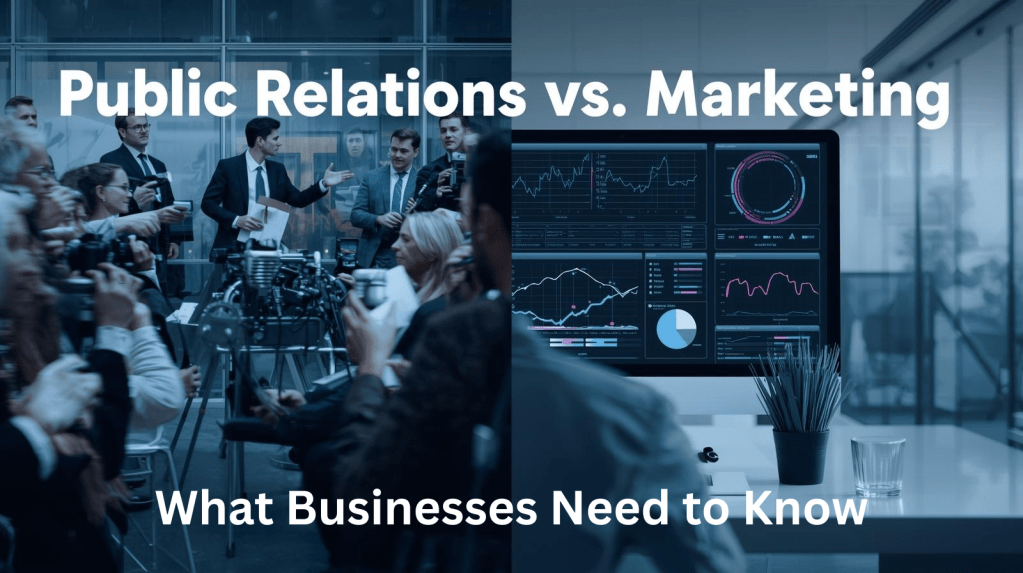
In today’s competitive business environment, companies are constantly searching for the most effective way to grow their brand, attract customers, and build credibility. Two disciplines frequently discussed in this context are public relations (PR) and marketing. While the terms are often used interchangeably, they represent very different strategies with different outcomes.
Both public relations and marketing aim to increase awareness and influence audiences, but the approach, credibility, and long-term impact of each method vary significantly. For most businesses seeking sustained growth and trust in the marketplace, public relations often proves to be the more powerful and strategic investment.
Understanding the Core Difference
At its foundation, marketing focuses on promoting and selling products or services. It typically involves activities such as advertising, paid campaigns, market research, and targeted promotions designed to generate sales.
Public relations, on the other hand, focuses on shaping how a brand or organization is perceived by the public. PR professionals manage communication with the media, stakeholders, and the broader public to create a positive reputation and build lasting relationships.
In simple terms:
- Marketing drives transactions
- Public Relations builds trust
And in many cases, trust is the foundation that ultimately drives those transactions.
Key Differences Between Public Relations and Marketing
Although the two disciplines often work together, several important differences separate them.
1. Paid Media vs. Earned Media
Marketing relies heavily on paid media, such as digital advertising, sponsored content, and promotional campaigns. Businesses pay directly for visibility in front of their target audience.
Public relations relies primarily on earned media—coverage in newspapers, television interviews, podcasts, industry publications, and online media outlets. Instead of paying for exposure, companies earn credibility through third-party validation.
Because these stories are told by journalists, editors, and independent media outlets, they often carry significantly more credibility with audiences.
2. Sales vs. Reputation
Marketing campaigns are typically designed to generate immediate sales or conversions. Success is often measured by clicks, leads, and revenue.
Public relations focuses on something deeper: brand reputation and public perception. PR campaigns aim to shape how a company is viewed by customers, investors, partners, and the community.
Businesses that invest in professional public relations services often see stronger media visibility and improved credibility in their industries. A strong reputation ultimately influences buying decisions, making PR a powerful driver of long-term business growth.
3. Short-Term Results vs. Long-Term Brand Equity
Marketing campaigns often operate on short timelines. A paid advertisement may run for several weeks or months before the campaign ends.
Public relations is a long-term strategic effort designed to continuously build credibility and authority in the marketplace. Industry experts frequently describe PR as a “marathon, not a sprint,” because reputation and trust develop over time.
Over the long run, this accumulated trust can significantly amplify a brand’s influence and visibility.
4. One-Way Messaging vs. Relationship Building
Marketing messages are often one-directional, delivering promotional messaging directly to consumers.
Public relations, however, focuses on two-way communication and relationship building with media, community leaders, and stakeholders. These relationships help organizations maintain influence, credibility, and ongoing visibility.
Why Public Relations Often Delivers Greater Impact
For many businesses—especially small to mid-sized companies—public relations can deliver a higher return on investment than traditional marketing.
Here are a few reasons why:
Credibility and Trust
Consumers tend to trust editorial coverage far more than paid advertising. When a respected media outlet features a company in a news story or expert commentary, the brand gains immediate legitimacy. A strong media relations strategy helps organizations secure interviews, press coverage, and thought-leadership opportunities.
Authority and Thought Leadership
PR positions business leaders as experts through interviews, speaking engagements, contributed articles, and media appearances. This kind of exposure strengthens authority in ways advertising cannot replicate.
Expanded Visibility
Public relations campaigns can generate exposure across television, radio, print, digital media, podcasts, and social platforms—often reaching audiences that traditional advertising would struggle to access.
Long-Term Brand Value
While advertising stops working the moment a campaign ends, media coverage, press mentions, and online articles can continue delivering visibility for years.
The Most Successful Brands Invest in PR
Although marketing and public relations can complement each other, PR often serves as the foundation of brand credibility and awareness. Once that credibility is established, marketing campaigns become far more effective because audiences already trust the brand behind the message.
Working with an experienced public relations agency allows companies to leverage established media relationships and proven storytelling strategies.
In a media-driven world where reputation influences consumer decisions, businesses that invest in public relations gain a powerful advantage. By building trust, authority, and long-term visibility, PR doesn’t just promote a company—it shapes how the world sees it.
And in business, perception can be everything.